
Lead Generation23 August 20264 min read
How to Generate More Leads for Your Business Online: A Practical Guide for Business Owners
By Silas Ugwu, Founder of Quantix Growth
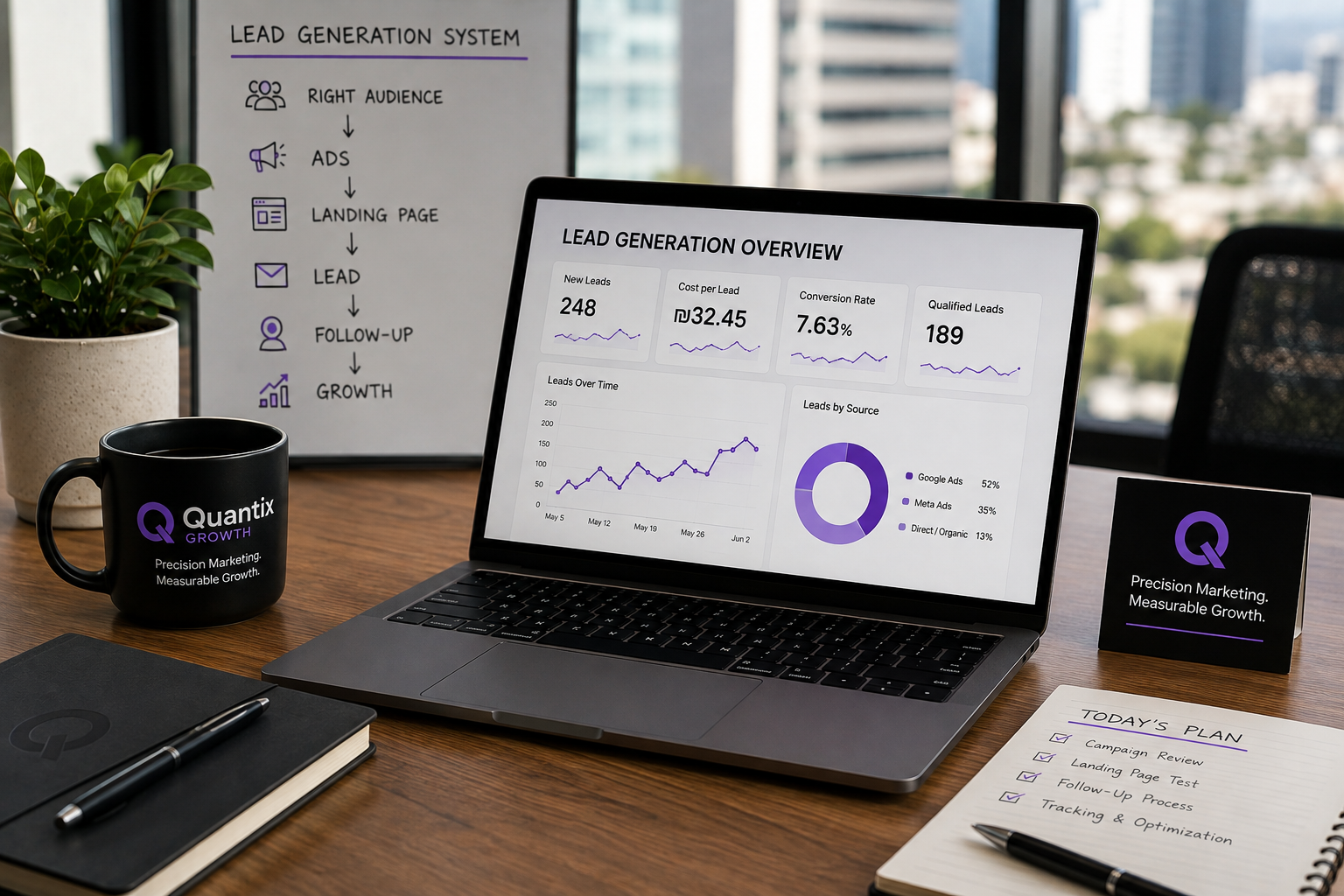
Getting more customers is one of the biggest priorities for almost every growing business.
But many business owners still depend heavily on referrals, word of mouth, occasional social media posts, or people simply discovering their business by chance.
Those channels can be valuable. The problem is that they may not provide a consistent and measurable way to generate new enquiries.
A stronger approach is to build a lead-generation system: a clear process that helps the right potential customers discover your business, understand your offer, take action, and become genuine sales opportunities.
Here is what that system can look like.
1. Start With a Clear Offer
Before spending money on advertising, make sure potential customers can quickly understand what you offer and why they should contact you.
Ask yourself:
- What problem does my service solve?
- Who is the service for?
- Why should someone choose my business?
- What should they do next?
If your offer is unclear, sending more people to it will not necessarily generate better results.
Advertising works best when it amplifies a strong, relevant offer.
2. Reach People With the Right Intent
Not every person online is a potential customer.
The goal isn't simply to get as many clicks, views, or followers as possible. The goal is to reach people who are reasonably likely to need what your business provides.
Two important advertising channels for this are Google Ads and Meta Ads.
Google Ads can help businesses appear when people are actively searching for relevant products or services.
Meta Ads can help businesses reach potential customers across platforms such as Facebook and Instagram based on the campaign strategy, audience, and message.
The right channel depends on your business, offer, audience, market, and objectives.
3. Give Potential Customers a Clear Place to Take Action
Getting someone to click an advertisement is only part of the process.
What happens after the click matters.
A conversion-focused landing page should make it easy for a potential customer to understand:
- What you offer
- Who it is for
- Why it matters
- What action they should take next
That action might be requesting a quote, submitting an enquiry, sending a message, or booking an appropriate consultation.
A confusing page can lose potential customers even when the advertising itself is working.
4. Make It Easy to Enquire
Don't make interested prospects work unnecessarily hard to contact your business.
Forms should ask for the information you genuinely need. Calls to action should be clear, and the next step should be easy to understand.
The objective isn't merely to collect as many form submissions as possible.
It is to create a process that attracts and captures relevant business enquiries.
5. Follow Up With Leads
Generating an enquiry doesn't automatically create a customer.
Businesses also need a clear follow-up process.
When someone expresses genuine interest, responding appropriately and keeping the conversation organized can make an important difference.
Advertising, therefore, shouldn't be treated as an isolated activity.
It is part of a larger process:
Attention → Interest → Enquiry → Follow-up → Sales opportunity
6. Track What Actually Generates Results
One of the advantages of digital marketing is the ability to measure what happens after people interact with your campaigns.
Businesses should understand which campaigns, advertisements, and landing pages are contributing to meaningful actions.
Without accurate conversion tracking, it becomes much harder to know what is working and where advertising budget may be wasted.
Good measurement allows businesses to make decisions using evidence rather than assumptions.
7. Keep Optimizing
A lead-generation system isn't something you launch once and forget.
Performance can change because of the audience, offer, advertising creative, competition, budget, landing page, follow-up process, and market conditions.
Continuous optimization means looking at the available data, identifying problems, and improving the system over time.
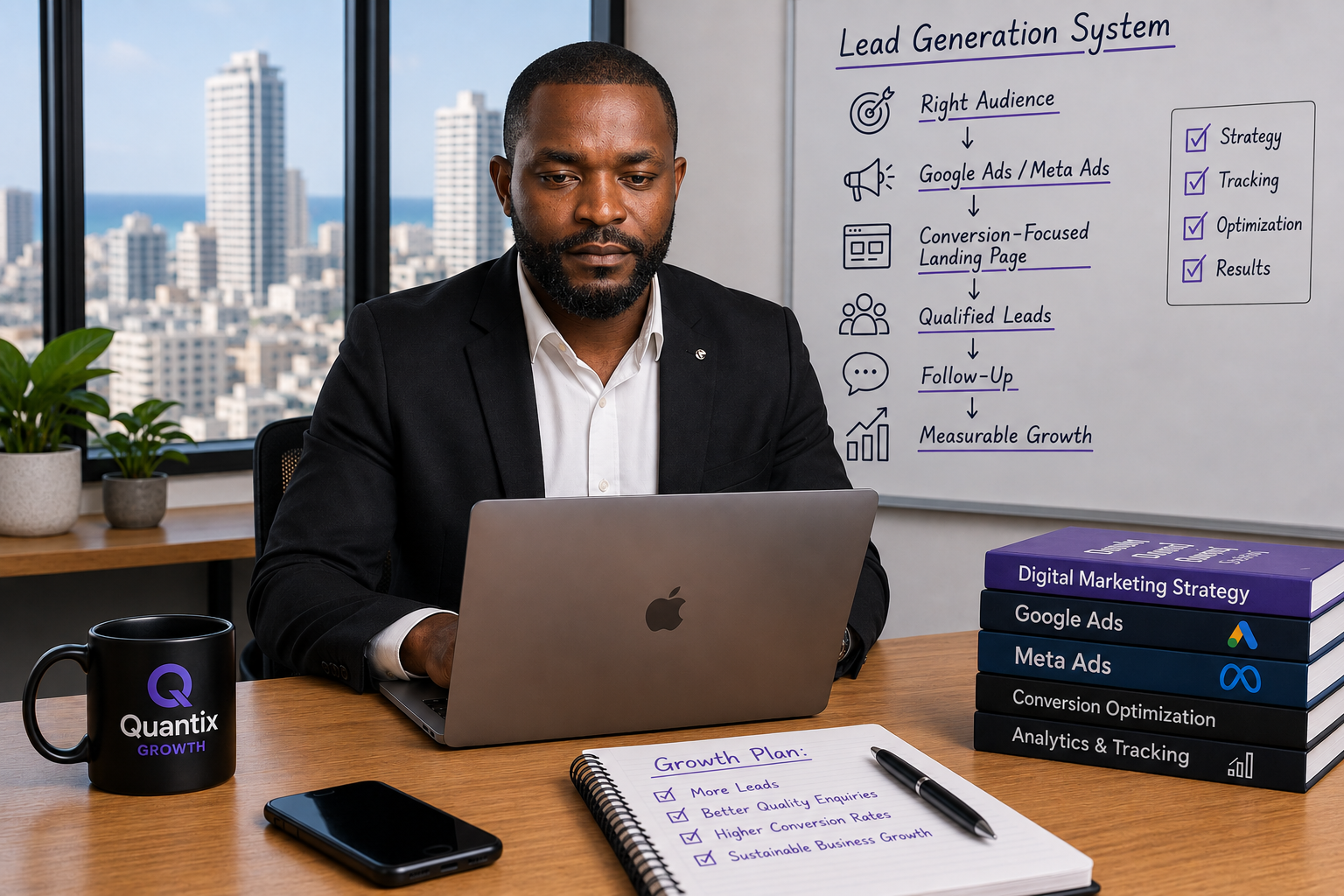
What Does the Complete System Look Like?
A practical online lead-generation system can be summarized like this:
Clear offer → Right audience → Google Ads or Meta Ads → Conversion-focused landing page → Enquiry → Follow-up → Tracking → Continuous optimization
Every part matters.
More advertising traffic will not automatically solve a weak offer, poor landing page, inaccurate tracking, or ineffective follow-up process.
The goal is to make these components work together.
Start With the System, Not Just the Ads
If your business wants to generate more leads online, don't begin by asking only:
"Which advertising platform should I use?"
A better question is:
"What system will turn the right online attention into qualified business enquiries?"
Once that system is clear, platforms such as Google Ads and Meta Ads can become tools within a much broader growth strategy.
Quantix Growth helps businesses build clearer lead-generation systems through Meta Ads, Google Ads, conversion-focused landing pages, accurate tracking, and continuous optimization.
Precision Marketing. Measurable Growth.
Silas Ugwu, Founder of Quantix Growth
Ready to Grow Your Business?
Discover how Quantix Growth can help you generate qualified leads through Meta Ads, Google Ads and conversion-focused digital marketing.
Book a Free Strategy CallRelated articles

Meta Ads17 August 20264 min read
How Meta Ads Can Generate Qualified Leads for Your Business
Stop paying for empty clicks. Discover how smarter targeting, stronger creative, accurate tracking and fast follow-up can turn Meta Ads into qualified leads.
Read Article